Up the Michigan Street Hill: The Medical Mile That Rebuilt a Neighborhood
A generation ago, Michigan Street NE was a quiet corridor east of downtown. Today the Medical Mile — hospitals, the Van Andel Institute, medical schools and research buildings climbing the hill — is one of the largest employment districts in West Michigan and the engine of Grand Rapids' modern economy.
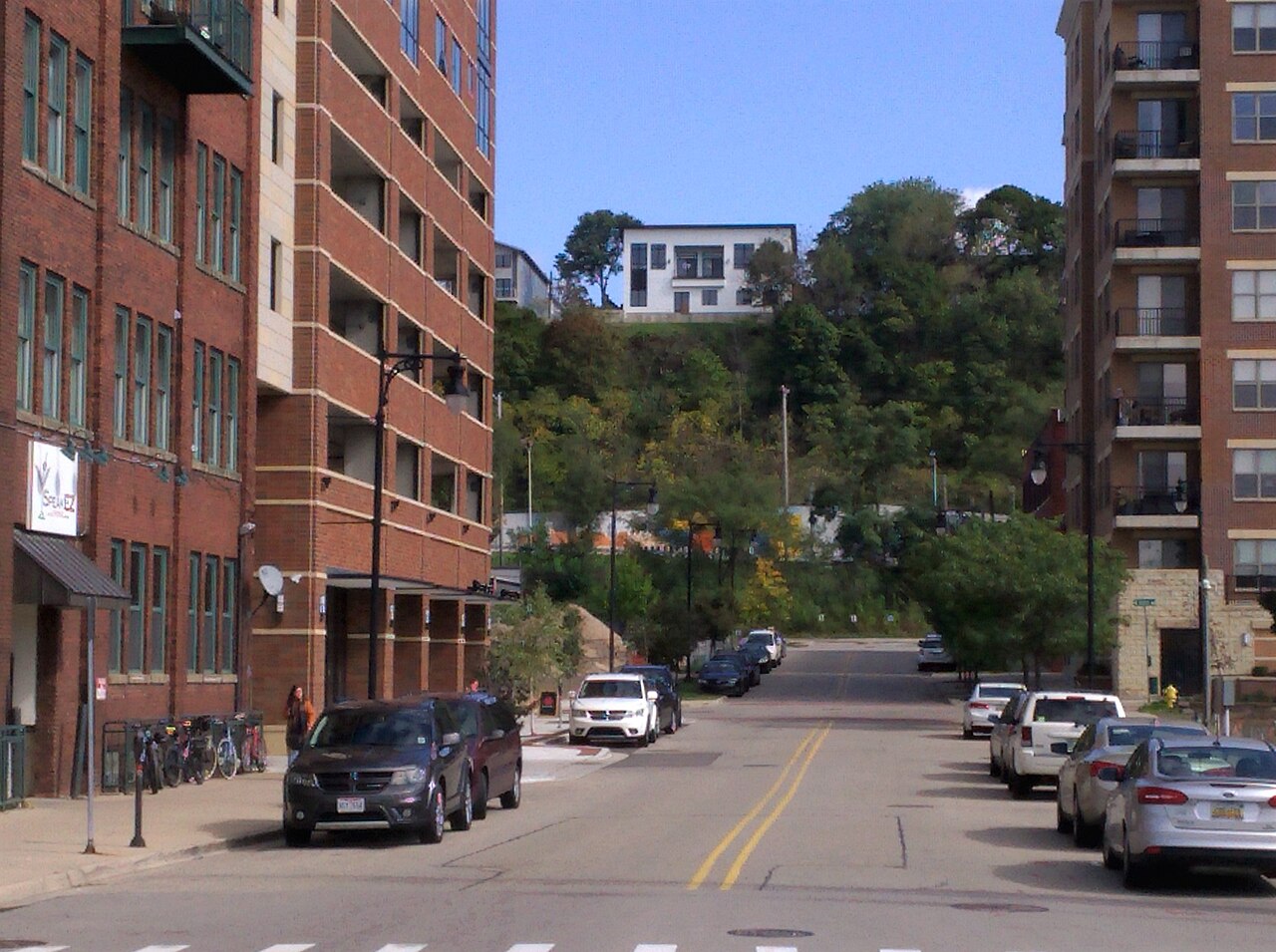
From downtown, Michigan Street climbs a long hill northeast — and for about a mile, nearly everything on both sides of it is medicine. The corridor the city calls the Medical Mile holds Corewell Health's Butterworth Hospital campus, Helen DeVos Children's Hospital, the Van Andel Institute's glass research building on the hill's crest, Michigan State University's College of Human Medicine, and Grand Valley State's health campus, among clinics, labs and medical offices too numerous to list from a moving car.
The transformation is recent enough that many residents watched it happen. The Van Andel Institute, founded by the Van Andel family and opened in 2000, anchored the research end of the corridor; hospital expansions and the medical school's arrival turned a hospital district into a full life-sciences cluster. The result is an employment engine that runs around the clock — three shifts of clinicians, researchers, students and support staff — in a neighborhood that also absorbs the traffic, parking and housing pressure that come with it.
The hill is still being built. Cranes over Michigan Street have been a near-permanent feature of the Grand Rapids skyline for twenty years, and each expansion restarts the neighborhood conversation in adjoining Belknap and Midtown: how a medical district grows without hollowing out the residential streets at its feet. Bus service up the corridor, hospital shuttle systems and new housing aimed at medical workers are all partial answers in progress.
For West Michigan, the Medical Mile is also a statement of economic identity. The furniture industry built the city's first fortune on this side of the river; the medical corridor built its second. A November weekday on the hill — students crossing to the institute, ambulances on Michigan Street, construction lights on the newest tower — is the Furniture City's modern self-portrait.