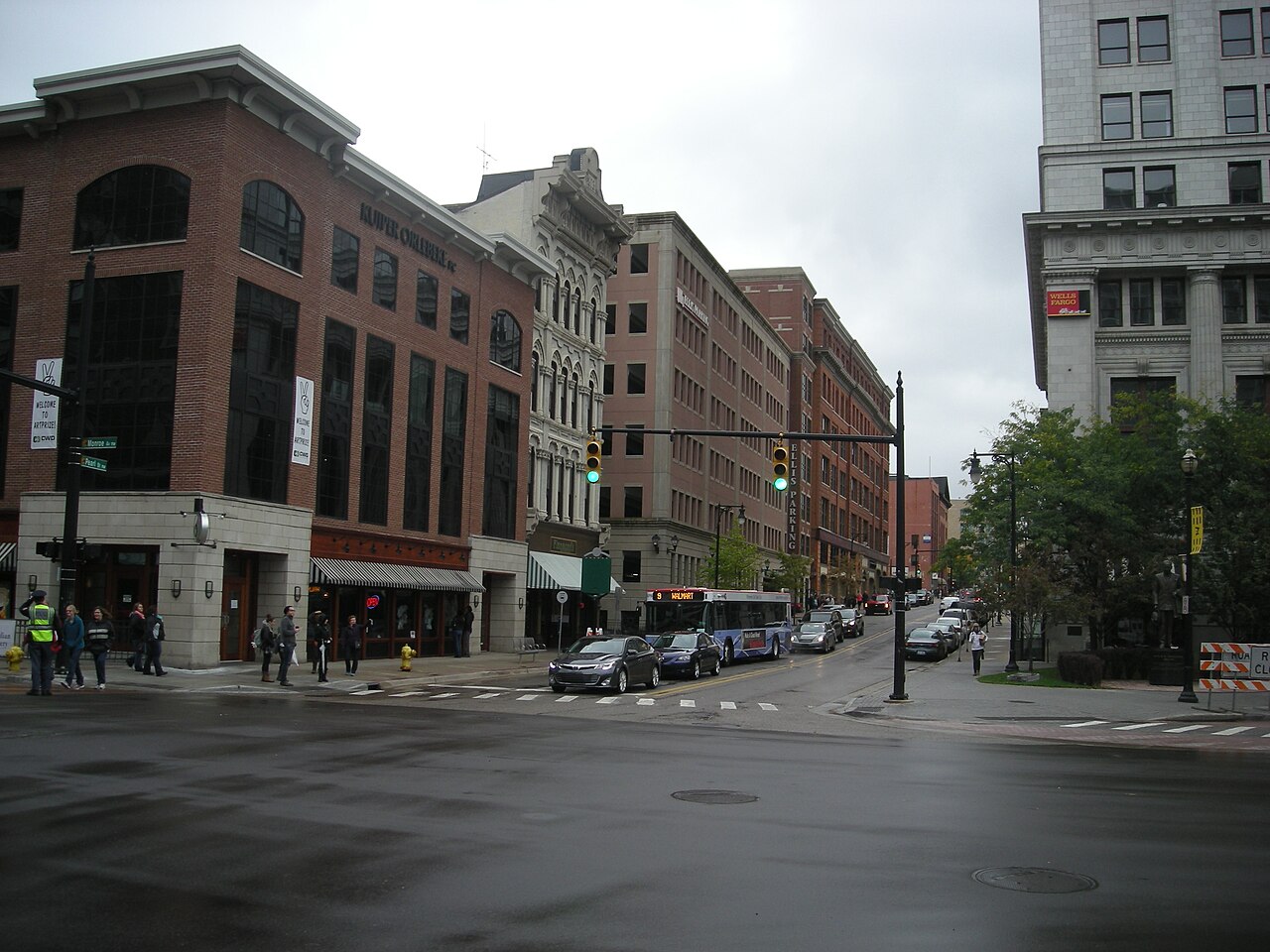
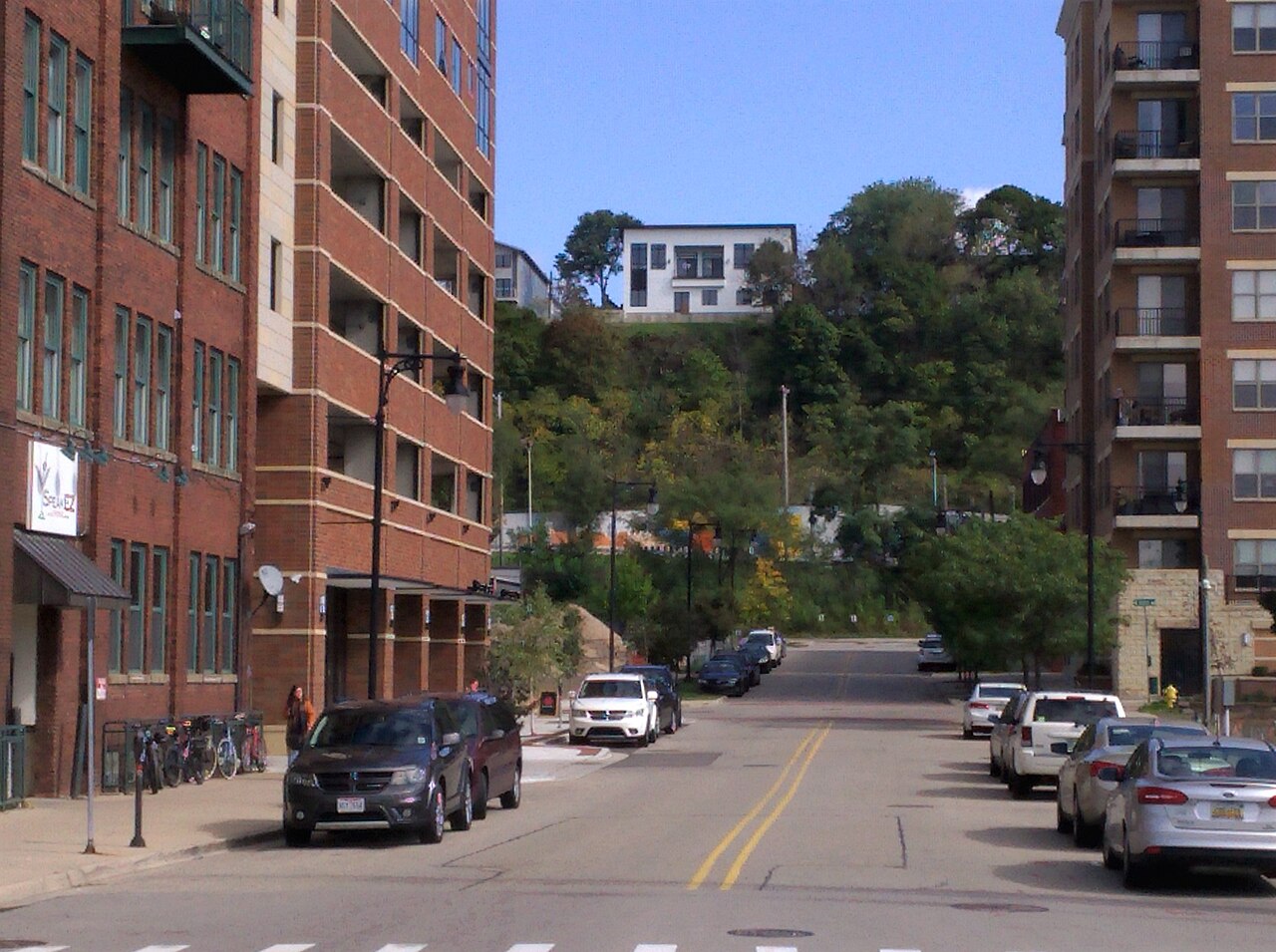
The Meyer May House and the Prairie School Heart of Heritage Hill
Frank Lloyd Wright's Meyer May House, built in 1908–09 and restored by Steelcase, anchors Heritage Hill — one of the largest urban historic districts in America, with some 1,300 homes on the bluff east of downtown. A November walk through the neighborhood is a master class in American architecture.
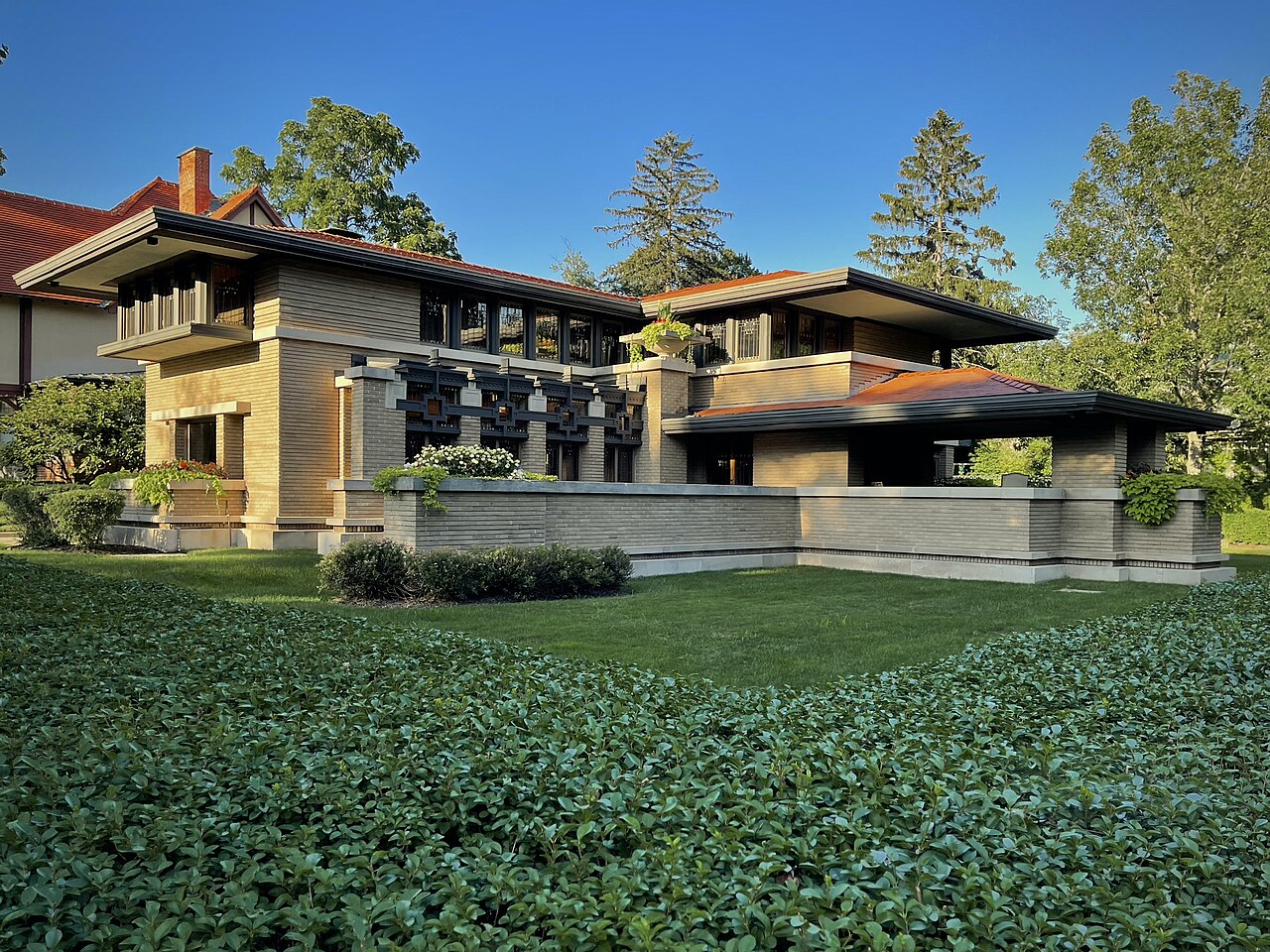
The house at 450 Madison Avenue SE does not announce itself, which is the point. Frank Lloyd Wright designed the Meyer May House in 1908 for a Grand Rapids clothing retailer, and it is one of the architect's great Prairie School works — low horizontal lines, overhanging eaves, art glass, and rooms arranged around light and landscape rather than a front-door facade. Steelcase, the Grand Rapids office-furniture company, bought the house in the 1980s and restored it to its 1909 condition with a rigor that preservationists still cite; it is open to the public for tours.
The Meyer May House sits in Heritage Hill, the neighborhood on the bluff immediately east of downtown, which is one of the largest urban historic districts in the United States — roughly 1,300 homes across about 90 blocks, spanning styles from Greek Revival farmhouses of the 1840s through Victorian mansions, Prairie School houses and early apartment buildings. The neighborhood was saved from freeway-era demolition plans in the late 1960s by its own residents' organizing, and the Heritage Hill Association that grew out of that fight still reviews the neighborhood's fortunes house by house.
November suits the district. With the leaves down, the architecture reads clearly — the rooflines along College and Crescent, the big porches built for a streetcar suburb, and the apartment courts that housed the furniture era's managers and makers. The neighborhood's annual tour season and the Meyer May House's tour schedule keep a steady flow of visitors walking streets that residents work hard to keep residential in character.
Heritage Hill is also a housing story, and a complicated one: a protected district of large older homes in a city that needs homes of every size, where restoration costs are real and every exterior change runs through historic review. That tension — museum piece or living neighborhood — is the same one Grand Rapids manages everywhere. Here, at least, the bones being argued over are some of the finest in Michigan.